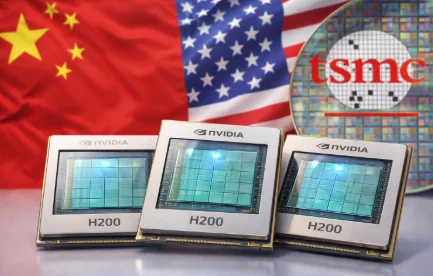
China is close to taking an important step in importing H200 artificial intelligence chips from US company Nvidia, in a development that could revive the advanced chip market in Asia's largest economy after years of tight restrictions. The H200 chip is among the most powerful in the AI processor category outside of Nvidia's latest offerings, with high model training and operation capabilities compared to less powerful models such as the H20, which was previously targeted for Chinese exports with limited controls. According to informed sources, Chinese authorities are moving to give local companies the green light to import these chips for use in commercial and technical applications, while prohibiting their use in sensitive government agencies, critical infrastructure, military bodies, and state-owned institutions for security reasons. For its part, Nvidia has imposed strict conditions on sales, including full payment before shipment with no possibility of cancellation or modification of specifications, to reduce commercial risks in light of the uncertainty surrounding China's final decision. This move comes amid strong demand from Chinese technology companies for H200 chips, which outperform domestic chips such as Huawei's Ascend in many advanced applications, while Taiwan's TSMC is preparing to increase production to meet growing demand. This partial shift in Chinese policy is attributed to the easing of US export restrictions, which recently allowed the export of these chips on condition of paying a 25% fee to the US government, enabling Chinese companies to purchase these chips despite security concerns. At the same time, Beijing may require companies to purchase a portion of domestic chips alongside Nvidia chips to boost domestic industry and reduce dependence on foreign technology, reflecting the delicate balance between the need for advanced technology and stimulating the growth of the artificial intelligence sector on the one hand, and protecting national security and promoting domestic industry on the other, This is happening in the context of geo-technological competition between the world's two largest economic powers.
China is close to importing H200 Invidia.