Major artificial intelligence companies and global research centers are adopting unconventional research approaches to understand the behavior of large language models, treating them as systems similar to living organisms, rather than simply computer programs that can be directly reverse-engineered. This shift, highlighted in a recent report published by MIT Technology Review, reflects a growing realization that the structural and functional complexity of these models has exceeded the limits of understanding with classic software tools.
Unlike traditional software, which is built according to clear instructions and sequential steps set by engineers, large language models are large language models are "developed" through complex training processes that rely on vast amounts of data, with machine learning algorithms automatically determining internal values, without direct control or detailed human understanding of everything that happens within the model. This reality makes interpreting the behavior of models, or predicting their responses in new situations, a task closer to studying a living organism than examining a machine.
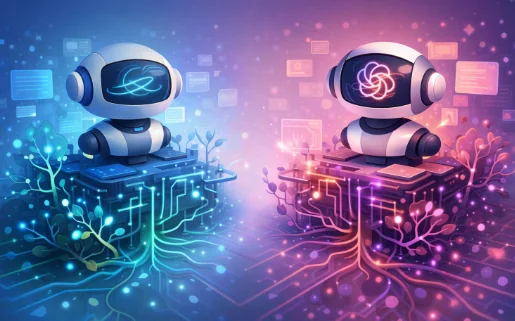
Researchers at Anthropic, the company that developed the Claude model, liken the process of training models to growing a tree. An engineer can choose the type of seed, soil, amount of water, and general direction of growth, but they do not have precise control over the shape of each branch or leaf. Similarly, intelligent models grow under the influence of "digital environmental pressures" represented by data, loss functions, and reward mechanisms, rather than strict engineering plans.
Within this framework, researchers adopt an analytical approach inspired by biology, based on the distinction between two fundamental elements: parameters and activations. Parameters represent relatively fixed numerical values that are formed during training and can be likened to the skeleton of a living organism, as they determine its general capabilities. Activations, on the other hand, are dynamic states that change with each new input and are very similar to the neural activity or physiological responses of living organisms. This new understanding may form the basis for the development of more effective tools for understanding and controlling artificial intelligence in the future.