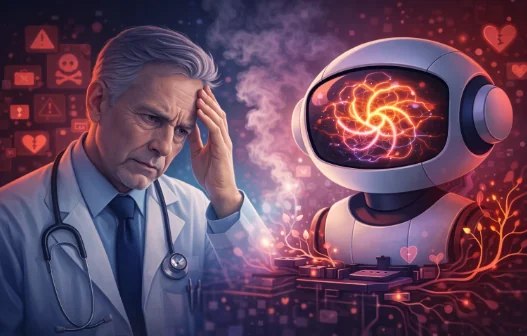
With the rapid spread of generative AI technologies, from chatbots to apps that simulate empathy and psychological support, a disturbing phenomenon has begun to surface, dubbed "AI psychosis" by the media. Although this term is not an officially recognized medical diagnosis, there are increasing reports that some cases of psychosis are linked to intense and prolonged interactions with AI systems, according to a report published by the science website ScienceAlert.
From a psychiatric perspective, psychosis is a disorder characterized by a loss of contact with reality, which may manifest itself in the form of delusions, hallucinations, or disturbed and disorganized thinking. Historically, these delusions were based on cultural elements prevalent in each era, such as religious interpretations, theories of government surveillance, or the influence of radio waves. Today, artificial intelligence has become a new part of this interpretive framework, giving delusions a contemporary and interactive character.
According to the report, some patients believe that AI systems have a special consciousness, send them hidden messages, control their thoughts, or even involve them in a "special mission." Experts believe that these patterns are not new in essence, but they become more complex and dangerous when the delusion is coupled with a system capable of continuous interaction and rapid response, which may reinforce false beliefs rather than weaken them.
The problem is that conversational AI models are designed to be empathetic and accommodating to the user, which is a useful feature for most people. However, this feature can become a risk factor for individuals who have difficulty with "reality testing," i.e., the ability to distinguish between subjective ideas and external reality. Psychiatrists warn that this interaction may provide a kind of "unintended confirmation" of confused thoughts, especially in people who are prone to psychosis or in its early stages. In addition, overreliance on AI companions may increase social isolation, a known factor in the exacerbation of psychotic disorders.