Description

️ Tool Name: 🖼
Mochi 1 (Genmo AI)

Categories: 🔖

  • Text and Images to Video
  • Image Generation from Text
  • Video, Editing, and Motion Graphics
  • Video Ideas and Scripts
  • Programming and Development
  • Databases and Modeling

️ What does this tool offer? ✏

Mochi 1 is an open-source model for creating videos using artificial intelligence, developed by Genmo with the goal of providing an advanced model for generating videos from text with high-quality motion and a strong understanding of text commands.

The model is based on Text-to-Videotechnology, which can convert text descriptions into animated videos, with a focus on:

  • Accurately understanding user instructions.
  • Producing realistic motion within the video.
  • Preserving scene details and visual elements.

Mochi 1 uses the Asymmetric Diffusion Transformer (AsymmDiT)architecture, a diffusion model containing 10 billion parameters (10B Parameters), and was trained from scratch as an open-source model for video generation.

The project also includes a proprietary video compression model called AsymmVAE that helps process videos efficiently by compressing visual data to reduce processing requirements.

Mochi 1 provides:

  • Generating videos from text.
  • Local model execution.
  • The ability to customize the model through fine-tuning using LoRA.
  • The ability to integrate it with other tools and projects such as ComfyUI.

The model is released under the Apache 2.0license, which allows it to be used and developed within various projects in accordance with the license terms.


What does it actually offer based on user experience? ⭐

  • Generates AI-powered videos from text descriptions.
  • Produces high-quality video motion with good adherence to text prompts.
  • Providing an open-source model that researchers and developers can modify and run locally.
  • The ability to customize the model using LoRA to train it on specific videos.
  • Providing a user interface via Gradio and generating videos via the command line (CLI).
  • Support for API integration within the repository.

According to the official repository, Mochi supports running the model on multiple GPUs, and while it can run on a single GPU, it requires significant resources; the documentation indicates a need for approximately 60GB of VRAM when running on a single GPU in the original version.


Does it include automation? 🤖

Yes, Mochi 1 relies on AI-powered video generation automation.

Automation includes:

  • Automatically converting text to video.
  • Performing the entire generation process via the model without manual intervention in the animation.
  • The ability to integrate the model into applications or content production systems via API.
  • Support for creating custom workflows for developers and researchers.

Pricing model: 💰

Free and open source.

Mochi 1 does not rely on a paid subscription; the following are provided:

  • Source code.
  • Model weights.
  • Runtime tools.

It can be run locally or used in environments that support the model.


🆓 Free Plan Details:

FeatureDetails
PriceFree
Usage TypeOpen Source
Source CodeAvailable
Model weightsAvailable
LicenseApache 2.0
RuntimeLocally after installing the dependencies
CustomizationLoRA Fine-tuning Support


Paid Plan Details: 💳

PlanPriceFeatures
No paid plansNot availableThe platform is open source and does not offer paid subscriptions

How to access the tool: 🧭

MethodAvailable
WebsiteVia Genmo Playground ✔
GitHub Repository
Local execution
API
Standalone appNot specified
Add-onNot specified

The project is accessible via the official GitHub repository, which provides installation and runtime files as well as usage examples.


Demo link or official website: 🔗

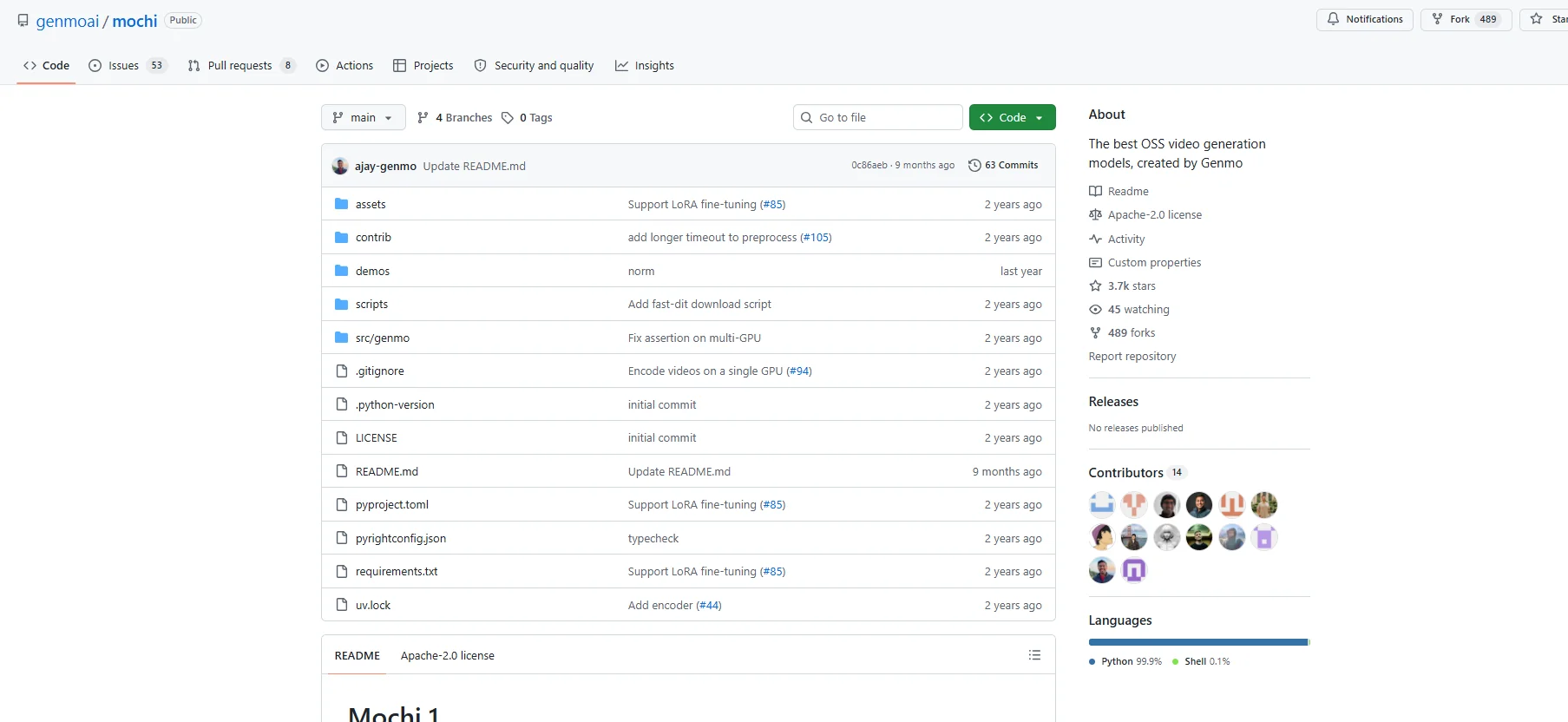
https://github.com/genmoai/mochi

Pricing Details

Mochi 1 (Genmo AI) is available for free and is open source; it does not rely on a subscription model or paid plans. The project provides users with access to the source code, model weights, and runtime tools under the Apache 2.0 license, allowing it to be used, developed, and modified within various projects. The model can be run locally after meeting the necessary technical requirements, or integrated into other environments and tools such as ComfyUI or via APIs. There are currently no official paid plans associated with Mochi 1, as the model is provided entirely as an open-source project for developers and researchers.